A collection of essays, outdoor adventure stories, ruminations, wordplay, parental angst, and blatant omphaloskepsis, generated in all seasons and for many reasons at 64.8 degrees north latitude

Sunday, September 4, 2022

The Random Cat Principle


Not long ago, a friend of mine sought advice on Facebook.  Should he adopt a promising-sounding young cat that was listed at the local animal shelter?

Go for it, his many kind-hearted friends advised him.  Adopt the cat!

Some of us – I’ll call us the advocates of the Random Cat Principle -- went one step further.  If that particular cat has already found a home, we advised, adopt whatever cat is there -- any cat at all. 

The Random Cat Principle got me thinking -- and ultimately set me to writing a blog post that is sneakily more about people than it is about pets. 

But first, cats.

Four years ago, a few months after our beloved Pippin died at the age of nineteen, the twins convinced us to head to the shelter as a family to get another cat.  They’d already picked out a name, Sinbad, based on a cat-character in a favorite novel.  As it turned out, there was only one cat at the Fairbanks North Star Borough Animal Shelter that morning.  Thus, she became our cat.  That was the entire equation for the application of the Random Cat Principle: here is a cat, she needs love, we want a cat to love – therefore, she is Sinbad, and we love her.  Four years later, that love has never fallen into any doubt.

What’s interesting about this anecdote is not that it’s unusual, but that it isn’t.

Love. Between one human and another, that word has a lot of blurred-yet-weighty meanings that include not only enjoying and appreciating someone’s particular qualities, but also genetics, guilt-trips, candlelit dinners, callipygian tendencies, dependence, hero-worship, obsession, country songs, and cringy rom-coms.  Sometimes we talk about love as if it were an emotion over which we have no control, as in “falling in love”. In other contexts, it’s an emotion we assign based on objective merit, as in, “My friend always brings pizza; I totally love him!” 

Loving a pet is easier to parse. I am not genetically related to Sinbad, except in the sense that I am also genetically related to chimpanzees, weevils, and bananas.  My obligations are entirely chosen, and she (being a cat) feels none.  I do not worship her, and she (being a cat) does not worship me.  I am happy to report that our connection does not involve romance or lust.  I appreciate many of Sinbad’s particular qualities (she’s curious, fuzzy, and affectionate) and she seems to enjoy some of mine (I’m playful, cuddly, and am willing to open and close doors a lot).  Yes, it now seems to me that she is a superlative cat.  But I’ve found likeable qualities in every cat I’ve ever lived with -- and every dog, and every orphaned squirrel.  My statistical heart knows that this is not Lake Woebegone, where all the critters are above average.  I see everything that is wonderful about Sinbad because I love her, rather than the other way around.

People are more complicated than cats.  There’s nothing wrong with that; I enjoy having a brain that’s weightier than a AA battery.  As such, we humans reserve the right to select our friends – people who are intelligent, kind, generous, quick-witted, empathetic, supportive, funny, creative, energetic, thoughtful, wise, or good at making vegetarian burritos. All that choice is empowering, but it can also be confusing and worrisome.  If we love others for their desirable qualities, are we merely being self-serving?  If others love us for our homologous paternal chromosomes, our excellent knock-knock jokes, or our sculpted thighs, is that love transactional and impermanent? Forced and coerced?

The Random Cat Principle reassures us that love is something we choose to do.  It’s something we undertake and create. Yes, we often (but not always) choose whom to love in a non-random way, but ultimately love is something we can build and rebuild, using magical fairy dust made from time, neural connections, and free will.  Love is a superpower

Superpowers don’t come cheap.  As a never-ending act of doing, creating, and rebuilding, love is the most expensive undertaking of our lives.  It comes with huge unavoidable risks. Sometimes love is not reciprocated.  Sometimes it needs to be ended, and sometimes it ends too soon.  To love someone –  even somecat -- is to set yourself up for work, frustration, disappointment, and devastation.  We suffer and ruminate over our failures and losses, but we rarely give ourselves enough credit for our successes, our ability to discover and nourish the good in others, our astonishing acts of creation.  We rarely give ourselves credit for the quirky beauty of the Random Cat Principle.

My friend went to the shelter.  The young cat he’d had in mind had already been adopted by someone else.  A different cat was there -- an older black cat of entirely unknown qualities.  A cat that needed a home.

My friend now has a cat, and the cat has him, and they love one another.


Thursday, June 16, 2022

Tough


You are afraid to ask to have your needs met because you fear the pain of an unanswered request more than the pain of an unmet need.

I read this meme with a stab of recognition.

Then, immediately, I rebelled. That’s too simplistic!  

Memes are irksome like that. Mostly, I ignore them.  But this one kept rattling around in my head, offering itself up for addenda:

You are afraid to ask to have your needs met because having needs, and admitting to them, undermines your fierce self-reliance.

Fierce self-reliance is like a liferaft: crucial, and at the same time flimsy as hell in a stormy ocean.  The trick is finding the right balance.

As a child, I was beloved, well cared for – and remarkably bad at finding that balance.  

I remember being three more clearly than most people do.  I remember being told, “You are too big to be picked up”.  I was devastated.  But I didn’t cry.  I just… stopped asking. 

I got an infection in one finger.  It hurt. I hid it.  When my sister finally spotted it, it had gotten so bad that it required surgical lancing and a full course of antibiotics. 

I woke in the night sweating and covered in my own vomit – but did not run to my parents, or call out.  I rolled around, trying to find a cool, dry spot.  As you can imagine, this did not improve the situation.

Clearly, I was a maladaptive preschooler – and yet… there was also a flip side:

When I was three I learned to read.  I could do it, all by myself.  I stood on a stool to reach the counter, and I helped.  I hiked five miles on my very short legs. When I was three I was a person, a spirit to be contended with, and my pride was a glowing ember.

You are afraid to ask to have your needs met because having needs is shameful, and that shame makes the act of asking seem pathetic, less-than, unworthy, annoying, demanding, needy, indebted, dependent.

When I was six I remember being told, “You are too old for laps”.  I did not climb up again. And I did not ask for a nightlight, or a crack in the door, not ever.  And I tried to hide my vivid and motley collection of fears – of tree fungus, of dogs, of the White Witch of Narnia – and my nightmares about the monsters. They lived in the basement, behind the dollhouse.  If I wasn't completely silent, they would hunt me down. When I was six I curled around a cloth doll in the pitch darkness, hands over my ears, and mistook the thudding of my own heart for the ominous tread of monster feet.

Yes… but also…

When I was six I read books hundreds of pages long, learned to play bridge, did multiplication problems, and walked to the store all by myself, crossing two roads and reaching up to drop a sweaty handful of loose change on the counter. I was very sure my mother would love to receive an ice cream scoop – the kind with a tiny cogwheel and fascinating gears connected to the lever on the handle – for her birthday.  And she did.  Of course she did. When I was six I felt ten feet tall.

You are afraid to ask to have your needs met because a need met grudgingly is even more agonizing than a refusal, and you aren’t sure whether you’ll be able to detect whether the act is grudging, but you’ll always fear it is, because if it is not grudging, why was it not performed freely, willingly, without asking?  

When I was nine and heard “You don’t need me to say good night anymore, do you?” I said no, no, of course I don’t. There was a key hanging around my neck on a piece of string, and after school I proudly let myself into an empty house, and made my own snack, and did my own homework.  And when I was eleven I had a paper route and a bike with wide wire baskets and pockets full of crumpled bills, and my first babysitting gig.  And when I was fifteen I had my first real job, the kind with paycheck and IRS involvement. After work, I walked home alone up the hill in the dark, in rain, in snow, a hundred times, despite my parents’ offers to come and get me. In years prior, when it had been my big sister who needed picking up, I’d seen them groan and bicker over who had to get out of a comfy armchair and miss the first ten minutes of Masterpiece Theater.  So I walked.  That walk made me feel sad and exhausted and alone, and yet it also made me feel strong and independent and free.  Both.  At once.  And even now, it’s impossible to untangle: should I have walked, or asked?  Asked, or walked?

You are afraid to ask to have your needs met because there are only two reasons you can think of why the act was not performed freely, willingly, and without asking, and one of them is “I didn’t want to” which your heart interprets as “You don’t deserve this” and the other is “I didn’t notice, I didn’t think about it”, which your heart interprets as “You are not worth not being seen, not worth being known, not worth the time and thought and energy of seeing and knowing.”

When I turned sixteen and heard “You don’t want a party or anything, do you?” I laughed and said no, of course not. And it was both a lie and the truth.

I was surrounded by loving, caring people.  Clearly, I was a maladaptive teenager. And yet…

Also when I was sixteen I woke up early on a Saturday and slipped out of the house and walked the two miles to school to take the PSAT, even though someone would have driven me if I’d asked.  And maybe if I’d asked, someone would have reminded me that it might be a good idea to take along a number two pencil, a notion that didn’t occur to me until I was trudging up the final hill.   There will be a lost pencil in the parking lot.  I’ll find one.  And I did.  I took a three hour exam with half a pencil that had been run over in the bus lane.  My score on that test earned me a National Merit Scholarship and a Byrd Scholarship – thousands of dollars handed over without question to kid who wasn’t smart enough to bring a pencil and wasn’t brave enough to borrow one.  I’m still not sure whether I’m proud or ashamed.  

You are afraid to ask to have your needs met because if the need is subtle, personal and contextual, your question might be answered, “What, am I supposed to read minds?” and your heart would whisper yes.  Yes, you should.  That is what I want.  The knowing, the noticing, the particularity, the seeing that includes context and empathy. See me!  Know me!  But that shout is as silent as the whisper.  

Fierce self-reliance is like a liferaft.  I would no more want to raise my kids without a vein of self-reliance than I would want them to launch them on the Titanic. I want my kids to have it, always – but I don’t want them to have just it, and nothing else, in a roiling sea.

There’s a balance.  It’s out there somewhere. But as I morphed from child to adult, I still hadn’t found it.

When I was eighteen and nineteen and twenty my heart broke quietly – again, and again, and again.  Maybe that’s always the case. Maybe no one can find that balance.  Maybe all the hearts break, everywhere.

I heard from female friends, “You don’t mind if I date that guy you’re friends with, do you?” And I said – each time, because there were several times – “Of course not, I think he likes you”. And I heard from male friends, “Hey, can I ask your advice about women?” I did not say, “You are beautiful, and your questions will destroy me.” I said – each time, because there were several times – “Sure, glad to help.”

And I still can’t tell whether I’m proud, or saddened.  I can’t untangle it.

I don’t know how to be different. I don’t know how to advise someone who has a heart like mine and fears like mine – silent, smiling fears full of nonchalant laughter. I don’t know how to change the course of a waterfall of crushing logic except to say that your joy is my joy – truly, ungrudgingly. Except to say that I long to nourish your joy – truly, ungrudgingly. Except to say I know.  I know.  

I know you will not ask. Even if I say, Ask!  Ask! you will not ask – because, because, because. Because you fear the pain of an unanswered request more than the pain of an unmet need. Yes, that meme, and so much more.  Because of who you are, and who I am – and perhaps who we all are.

So I will try. I will remember. I see you. 

Saturday, June 11, 2022

One for the Ages


Fun math fact: if you give birth to all of your children – twin daughters -- in the same month that you turn 34, you will turn 50 in the same month that they reach 16. 

I’ve been watching as, one by one, my age-cohort reaches the half-century mark – and as a cohort of our kids morphs into adults. Reactions have been mixed: trepidation, celebration, resignation, disinterest.  Is age purely continuous, a linear function?  Or do we reach discrete, transformative landmarks? And if there are waypoints, are they like Rivendell?  Hogsmeade? The Cliffs of Insanity?  I’m fascinated by the math and the mythos of aging. 

In old-school fairytales – the creepy ones that Disney revamped to be still creepy but in a different way – at age 16 girls become fair maidens, and at age 50 women become crones.  Neither transition seems advantageous.  The maiden is defined by her beauty, and not much else.  She  is perpetually at risk of being imprisoned, married off, or bewitched.  The crone is defined by her lack of beauty – and possible lack of morals.  She may be wise and powerful, but she  tends to lose her mind and start talking to mirrors and doing weird things with breadcrumbs and apples and spindles. Mirror, mirror, on the wall, if your skin-deep charms are usurped by the next generation, then you are nothing – or a witch. I'll choose witch, thanks. 

Luckily, in our animated movies and our reality, the options seem to be expanding.

Teenagers, I’d argue, are all the archetypes rolled into one: the sweet innocence of the maiden, the loveliness of the prince,  the awkwardness of the beast, and the fierce power of the warrior. They are adorable, brilliant, loving, and fearsome.  They always have been.  But this generation, I think, is better poised than mine was to embrace that oxymoronic complexity.  Roles and transformations can be chosen. Anyone can be the hero of the story.  He, she, or they might slay the dragon – or tame it, or befriend it – with or without magical kisses.  With or without frogs.

Meanwhile, those of us born in Gen X are teaching ourselves – and learning from the bravest of those who came before us – to be less reticent and coy about aging. We’re also learning from our children; every generation does so, and every generation is grouchy and graceless about it. These days, fifty-year olds have thriving careers and fascinating hobbies.  They are donning running shorts or snorkels or tap shoes.  They’re letting their hair turn gray, or they’re dying it purple and green, or shaving off one side of it.  We are not hiding or lying – about ourselves, or our ages. Those who are stepmothers are not presumed evil. The crone can also be a tested warrior or a respected sage. 

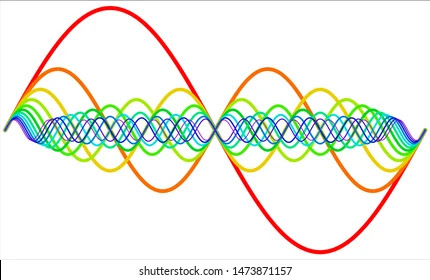
If my newly fledged sixteen-year-olds and I are bewitched, it’s less mythological than it is mathematical.  One of them remarked recently that “The geometry of calculus is just so beautiful.” The volume of a sphere, she reminded me, can be calculated as a continuous sum of vanishingly thin surface layers.  The other twin finds beauty in the precision of pencil lines, molded forms, seams, structures, lyrics.  Chords are constructed of sound waves with precisely intersecting frequencies and peaks – least common denominators of harmony amidst dissonance.

If math lets us celebrate the precision of harmonious intervals as well as the fluidity of continuous sums, perhaps we can recognize both in our lives, too.  We grow and transform.  We cross thresholds – sometimes imperceptibly, sometimes in a rush of music.  Each moment in time creates its own distinct resonances.  And yet, there is no discrete time in which we are wholly maiden, prince, warrior, hero, crone, or sage. Who we are at any ephemeral moment – our surface – is always the derivative of our solid reality, our lifelong volume, our whole. 

We change, and the passage of time is beyond our control.. But if we’re turning into witches, at the very least we can choose to be good witches.