A collection of essays, outdoor adventure stories, ruminations, wordplay, parental angst, and blatant omphaloskepsis, generated in all seasons and for many reasons at 64.8 degrees north latitude

Thursday, June 16, 2022

Tough


You are afraid to ask to have your needs met because you fear the pain of an unanswered request more than the pain of an unmet need.

I read this meme with a stab of recognition.

Then, immediately, I rebelled. That’s too simplistic!  

Memes are irksome like that. Mostly, I ignore them.  But this one kept rattling around in my head, offering itself up for addenda:

You are afraid to ask to have your needs met because having needs, and admitting to them, undermines your fierce self-reliance.

Fierce self-reliance is like a liferaft: crucial, and at the same time flimsy as hell in a stormy ocean.  The trick is finding the right balance.

As a child, I was beloved, well cared for – and remarkably bad at finding that balance.  

I remember being three more clearly than most people do.  I remember being told, “You are too big to be picked up”.  I was devastated.  But I didn’t cry.  I just… stopped asking. 

I got an infection in one finger.  It hurt. I hid it.  When my sister finally spotted it, it had gotten so bad that it required surgical lancing and a full course of antibiotics. 

I woke in the night sweating and covered in my own vomit – but did not run to my parents, or call out.  I rolled around, trying to find a cool, dry spot.  As you can imagine, this did not improve the situation.

Clearly, I was a maladaptive preschooler – and yet… there was also a flip side:

When I was three I learned to read.  I could do it, all by myself.  I stood on a stool to reach the counter, and I helped.  I hiked five miles on my very short legs. When I was three I was a person, a spirit to be contended with, and my pride was a glowing ember.

You are afraid to ask to have your needs met because having needs is shameful, and that shame makes the act of asking seem pathetic, less-than, unworthy, annoying, demanding, needy, indebted, dependent.

When I was six I remember being told, “You are too old for laps”.  I did not climb up again. And I did not ask for a nightlight, or a crack in the door, not ever.  And I tried to hide my vivid and motley collection of fears – of tree fungus, of dogs, of the White Witch of Narnia – and my nightmares about the monsters. They lived in the basement, behind the dollhouse.  If I wasn't completely silent, they would hunt me down. When I was six I curled around a cloth doll in the pitch darkness, hands over my ears, and mistook the thudding of my own heart for the ominous tread of monster feet.

Yes… but also…

When I was six I read books hundreds of pages long, learned to play bridge, did multiplication problems, and walked to the store all by myself, crossing two roads and reaching up to drop a sweaty handful of loose change on the counter. I was very sure my mother would love to receive an ice cream scoop – the kind with a tiny cogwheel and fascinating gears connected to the lever on the handle – for her birthday.  And she did.  Of course she did. When I was six I felt ten feet tall.

You are afraid to ask to have your needs met because a need met grudgingly is even more agonizing than a refusal, and you aren’t sure whether you’ll be able to detect whether the act is grudging, but you’ll always fear it is, because if it is not grudging, why was it not performed freely, willingly, without asking?  

When I was nine and heard “You don’t need me to say good night anymore, do you?” I said no, no, of course I don’t. There was a key hanging around my neck on a piece of string, and after school I proudly let myself into an empty house, and made my own snack, and did my own homework.  And when I was eleven I had a paper route and a bike with wide wire baskets and pockets full of crumpled bills, and my first babysitting gig.  And when I was fifteen I had my first real job, the kind with paycheck and IRS involvement. After work, I walked home alone up the hill in the dark, in rain, in snow, a hundred times, despite my parents’ offers to come and get me. In years prior, when it had been my big sister who needed picking up, I’d seen them groan and bicker over who had to get out of a comfy armchair and miss the first ten minutes of Masterpiece Theater.  So I walked.  That walk made me feel sad and exhausted and alone, and yet it also made me feel strong and independent and free.  Both.  At once.  And even now, it’s impossible to untangle: should I have walked, or asked?  Asked, or walked?

You are afraid to ask to have your needs met because there are only two reasons you can think of why the act was not performed freely, willingly, and without asking, and one of them is “I didn’t want to” which your heart interprets as “You don’t deserve this” and the other is “I didn’t notice, I didn’t think about it”, which your heart interprets as “You are not worth not being seen, not worth being known, not worth the time and thought and energy of seeing and knowing.”

When I turned sixteen and heard “You don’t want a party or anything, do you?” I laughed and said no, of course not. And it was both a lie and the truth.

I was surrounded by loving, caring people.  Clearly, I was a maladaptive teenager. And yet…

Also when I was sixteen I woke up early on a Saturday and slipped out of the house and walked the two miles to school to take the PSAT, even though someone would have driven me if I’d asked.  And maybe if I’d asked, someone would have reminded me that it might be a good idea to take along a number two pencil, a notion that didn’t occur to me until I was trudging up the final hill.   There will be a lost pencil in the parking lot.  I’ll find one.  And I did.  I took a three hour exam with half a pencil that had been run over in the bus lane.  My score on that test earned me a National Merit Scholarship and a Byrd Scholarship – thousands of dollars handed over without question to kid who wasn’t smart enough to bring a pencil and wasn’t brave enough to borrow one.  I’m still not sure whether I’m proud or ashamed.  

You are afraid to ask to have your needs met because if the need is subtle, personal and contextual, your question might be answered, “What, am I supposed to read minds?” and your heart would whisper yes.  Yes, you should.  That is what I want.  The knowing, the noticing, the particularity, the seeing that includes context and empathy. See me!  Know me!  But that shout is as silent as the whisper.  

Fierce self-reliance is like a liferaft.  I would no more want to raise my kids without a vein of self-reliance than I would want them to launch them on the Titanic. I want my kids to have it, always – but I don’t want them to have just it, and nothing else, in a roiling sea.

There’s a balance.  It’s out there somewhere. But as I morphed from child to adult, I still hadn’t found it.

When I was eighteen and nineteen and twenty my heart broke quietly – again, and again, and again.  Maybe that’s always the case. Maybe no one can find that balance.  Maybe all the hearts break, everywhere.

I heard from female friends, “You don’t mind if I date that guy you’re friends with, do you?” And I said – each time, because there were several times – “Of course not, I think he likes you”. And I heard from male friends, “Hey, can I ask your advice about women?” I did not say, “You are beautiful, and your questions will destroy me.” I said – each time, because there were several times – “Sure, glad to help.”

And I still can’t tell whether I’m proud, or saddened.  I can’t untangle it.

I don’t know how to be different. I don’t know how to advise someone who has a heart like mine and fears like mine – silent, smiling fears full of nonchalant laughter. I don’t know how to change the course of a waterfall of crushing logic except to say that your joy is my joy – truly, ungrudgingly. Except to say that I long to nourish your joy – truly, ungrudgingly. Except to say I know.  I know.  

I know you will not ask. Even if I say, Ask!  Ask! you will not ask – because, because, because. Because you fear the pain of an unanswered request more than the pain of an unmet need. Yes, that meme, and so much more.  Because of who you are, and who I am – and perhaps who we all are.

So I will try. I will remember. I see you. 

Saturday, June 11, 2022

One for the Ages


Fun math fact: if you give birth to all of your children – twin daughters -- in the same month that you turn 34, you will turn 50 in the same month that they reach 16. 

I’ve been watching as, one by one, my age-cohort reaches the half-century mark – and as a cohort of our kids morphs into adults. Reactions have been mixed: trepidation, celebration, resignation, disinterest.  Is age purely continuous, a linear function?  Or do we reach discrete, transformative landmarks? And if there are waypoints, are they like Rivendell?  Hogsmeade? The Cliffs of Insanity?  I’m fascinated by the math and the mythos of aging. 

In old-school fairytales – the creepy ones that Disney revamped to be still creepy but in a different way – at age 16 girls become fair maidens, and at age 50 women become crones.  Neither transition seems advantageous.  The maiden is defined by her beauty, and not much else.  She  is perpetually at risk of being imprisoned, married off, or bewitched.  The crone is defined by her lack of beauty – and possible lack of morals.  She may be wise and powerful, but she  tends to lose her mind and start talking to mirrors and doing weird things with breadcrumbs and apples and spindles. Mirror, mirror, on the wall, if your skin-deep charms are usurped by the next generation, then you are nothing – or a witch. I'll choose witch, thanks. 

Luckily, in our animated movies and our reality, the options seem to be expanding.

Teenagers, I’d argue, are all the archetypes rolled into one: the sweet innocence of the maiden, the loveliness of the prince,  the awkwardness of the beast, and the fierce power of the warrior. They are adorable, brilliant, loving, and fearsome.  They always have been.  But this generation, I think, is better poised than mine was to embrace that oxymoronic complexity.  Roles and transformations can be chosen. Anyone can be the hero of the story.  He, she, or they might slay the dragon – or tame it, or befriend it – with or without magical kisses.  With or without frogs.

Meanwhile, those of us born in Gen X are teaching ourselves – and learning from the bravest of those who came before us – to be less reticent and coy about aging. We’re also learning from our children; every generation does so, and every generation is grouchy and graceless about it. These days, fifty-year olds have thriving careers and fascinating hobbies.  They are donning running shorts or snorkels or tap shoes.  They’re letting their hair turn gray, or they’re dying it purple and green, or shaving off one side of it.  We are not hiding or lying – about ourselves, or our ages. Those who are stepmothers are not presumed evil. The crone can also be a tested warrior or a respected sage. 

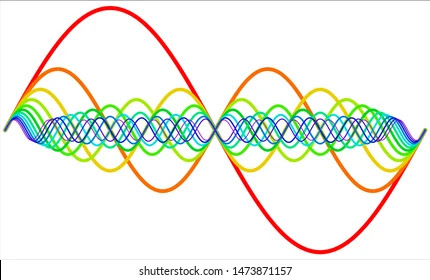
If my newly fledged sixteen-year-olds and I are bewitched, it’s less mythological than it is mathematical.  One of them remarked recently that “The geometry of calculus is just so beautiful.” The volume of a sphere, she reminded me, can be calculated as a continuous sum of vanishingly thin surface layers.  The other twin finds beauty in the precision of pencil lines, molded forms, seams, structures, lyrics.  Chords are constructed of sound waves with precisely intersecting frequencies and peaks – least common denominators of harmony amidst dissonance.

If math lets us celebrate the precision of harmonious intervals as well as the fluidity of continuous sums, perhaps we can recognize both in our lives, too.  We grow and transform.  We cross thresholds – sometimes imperceptibly, sometimes in a rush of music.  Each moment in time creates its own distinct resonances.  And yet, there is no discrete time in which we are wholly maiden, prince, warrior, hero, crone, or sage. Who we are at any ephemeral moment – our surface – is always the derivative of our solid reality, our lifelong volume, our whole. 

We change, and the passage of time is beyond our control.. But if we’re turning into witches, at the very least we can choose to be good witches.


Sunday, May 8, 2022

". . . these mortals be."

This is my first Mother’s Day since Mom died in February.  

That sounds like the start for something maudlin, but it isn’t; Mom didn’t even like Mother’s Day.  Or, to be more specific, she said the second Sunday in May was a silly Hallmark holiday, manufactured by sellers of cards and flowers.

Do I agree? What does it mean, exactly, to celebrate mothers? 

This feels like an especially pressing question these days.  But even if we assume that the form of motherhood we’re celebrating is voluntary, rather than the product some kind of Handmaid’s Tale dystopia that would have utterly horrified my mother… I still have questions.

Are we setting up motherhood as an ideal of womanhood? 

I’ll assume no, because… ick.  Do I even need to explain, on behalf of those women who cannot or choose not to be mothers, why this is vile?  Do I need to mention all the kids lovingly raised by single dads, two dads, grandparents, or other types of families?  Moving on…

Are we celebrating a purified and perfect ideal of motherhood – ever-patient, ever-kind, ever-baking-apple-pies? 

Again, ugh.  Mythicizing mothers makes it hard to be one, and hard to mourn one. It leaves all of us actual human living breathing imperfect mothers with feelings of guilt, inadequacy, and boxed-in-stereotyped frustration.  This is… maybe not a positive theme for a holiday.  

Perhaps the holiday is not intended to mythicize, but merely to express our debt to moms, imperfect as they may be, for the monumental work and sacrifice associated with motherhood? 

Better.  But repaying mom with a plate of waffles seems… laughably inadequate.  More to the point, it seems off-kilter.  Parenthood isn’t a debt that can be repaid.  Such an effort would be Sisyphean, impossible, ludicrous.  Expecting it would be warped.  I don’t want repayment from my kids.  My mother did not expect repayment from me. 

Arguably, though, it still makes sense to say thanks.  Mothers should not be taken for granted, right? 

Now we’re getting somewhere.  And yet… at the time in all our lives when our parents’ work was non-stop, exhausting, and downright gross, we needed to take everything for granted.  An infant shouldn’t feel guilty about hogging all that breastmilk, a toddler is incapable of fully understanding that Mommy didn’t want to be puked on, and even a ten-year-old needs to feel that bandaging that oozing scraped knee is something a parent wants to do, lovingly.  No judgement, no payment, no running tab.  Being taken for granted is a crucial part of parental territory.

What about later, though? 

Well, yes.  As kids reach the teen and adult years, they should gain empathy and perspective, to avoid becoming narcissists and sociopathic monsters.  But once we’re mature enough to understand where, when and why a “thank you” is merited, we begin to realize that – in the case of our parents -- there is no “thank you” that will suffice.  Uncomfortable, maybe, but true.  There is not, and never can be, anyone on Earth who loved me the way my parents did.  I have a great husband, two wonderful kids, a fabulous sister and some stellar friends; I’m not isolated and I’m not complaining.  It’s just how things work.  It goes the other way, too; I love my own kids more than they will ever be able to love me in return – not because their love for me is inadequate or stunted, but because mine for them is so inexpressibly vast. 

But can’t we still use the day as a reminder to celebrate our mothers? 

Well, yes.  Of course we can celebrate our mothers – not motherhood, not conceptual beings crafted from a monolithic ideal, not Mother the Wise Woman, Mother the Caretaker, Mother the Earth Goddess, or Mother the Embodiment of Sacrifice -- but specific real people that you know. 

In the nuclear family of my childhood, we celebrated everyone’s birthdays with enthusiasm, as celebrations of an individual.  All four of our birthdays occurred during the prettiest seven weeks of spring, rendering additional celebration seasonally redundant.  But for those whose birthdays are in November or February or August, Mother’s Day seems like a reasonable excuse for, essentially, a second birthday. 

I’m not qualified to define the “right” way to celebrate Mother’s Day.  It depends on who your mom is, or was, or might one day become.  But I do know that for me – and perhaps for most people -- feeling loved is closely linked to feeling known, feeling seen, feeling accepted and appreciated with all my flaws.  Thus, the core question: who was or is your mom? 

If she’s gone – or fading, as my mother did in her last few years – perhaps one way to celebrate her is to teach something that she taught you to someone younger.  Pass on a story, an off-color joke, an amusing habit, a bad-ass skill.  If your mother is still with you, maybe celebration means deepening that knowledge, that connection, that seen-ness.  Ask her what she’d most like to do, and where she’d most like to travel.  Email her to ask her opinions about something.  What book would she like to read?  Check it out from the library for her.  What would she laugh at?  Text it to her.  Is she training for a 5k?  Cheer her on. By all means give her flowers if she likes flowers, but give her video games or a new cordless drill or a bottle of whiskey if she’d like that better.  Celebrate your quirky, flawed, hilarious, complicated, imperfect, very-much-human mother -- not by putting her on a pedestal, but by knowing her.

My mother didn’t care about Mother’s Day.  That hasn’t stopped me from thinking about her today, because I think about her every day.  I also thought of her a lot on April 23rd, her birthday.  So too, it seems, did her childhood friend Angela.  On the 24th I received an email from England:

“I was thinking of Janet yesterday.....her birthday which, when we were ten, she informed me was the same as Shakespeare's.”

I recall my mother reminiscing about all the male roles she played – petite physique and waist-length pigtails notwithstanding -- in Shakespearean productions at her all-girls British school. 

Yesterday, I auditioned for this summer’s outdoor performance of A Midsummer Night’s Dream with Fairbanks Shakespeare Theatre.  Today, I got a call letting me know that I snagged a (small, comic) male role.  I’ll also pitch in with carpentry, costume-sewing, and flower-planting for the set.  I learned all those things from her, too.

There’s no Hallmark card that could capture my mother, on the second Sunday in May or any other day.  I know that.  I’m glad she knew that, too.   

All the same, happy Mother’s Day.

Thursday, February 24, 2022

Words, words, words


How does one summarize a life? Places traveled, words spoken, tasks completed, people touched?  What is the sum of thirty thousand, two hundred and fifty-six days?

Many people knew Janet Fresco as the head clerk at a public library in a mid-size suburban town – the library lady with the practical skirts and cardigans, the bun, the friendly laugh, and the soft British accent.  They knew her as a woman in motion – a busy wife and mother of two, and later a grandmother of four.  They knew her as a walker, striding along the sidewalks or trails.  They might have known that she sewed all those practical skirts herself, knitted the sweaters, grew a garden, and turned her capable hands to carpentry to build more shelves for all those books. 

They might not have known that she spoke French and Turkish, and worked encrypting and decrypting encoded diplomatic mail for the British embassy in Phnom Penh, Cambodia, during the tumultuous rise of the Khmer Rouge in the 1960s. 

My mother was a more complex and interesting person than I knew or understood when I was a kid.  But then, isn’t that always the case?

Mom (ahem, Mum) – Janet Malyon -- was born in southern England in April 1939, four months before Germany invaded Poland and Britain entered the Second World War.  Her earliest memories were a blend of warm family harmony -- her loving parents, big brother John, and friends Margaret and Angela – and the daily realities of wartime.  She remembered hearing the unmanned bombers and the air-raid sirens; hiding under the table and in bomb shelters; collecting interesting shrapnel from downed planes; carrying a gas mask and counting ration coupons.  Her father, an engineer, worked on the frenzied and crucial race to develop effective radar.  Her mother planted a garden large enough to be a farm, raised chickens in their suburban yard, and traded birds with the neighbors to avoid trauma when it came time to eat them.  The kids collected rosehips for the vitamin C.  The war ended when Mom was six, but food was rationed in Britain until she was 15.

My mother was someone who understood that Nazis have to be fought; knew the value of peace; and didn’t like waste.

Mom loved books from the time she was tiny, and ambitiously started writing her own when she was nine.  She easily passed the “eleven plus” exam and went on to the academic grammar school in Tunbridge.  She excelled there, passing a heap of A-level exams, but when the time came to choose her path forward, university held little appeal.  Her only educated female role models were unmarried teachers and nurses.  The world as she knew it had not yet grown to include women with education, careers, and families.  The world as she knew it boxed her in.

Plenty of people who knew Mom in later years assumed that she was a librarian, because she was so erudite, intellectual, and well-read, someone who not only worked with books, but loved them, too – not just Shakespeare and Dickens and Austen, but a full range from pot-boilers and romances to new classics and old.  But she never went to college; she had no library degree.

Instead, Mom took a secretarial course, learned to type and take shorthand at a blistering pace, and worked in London for a short time.  But her feet itched for adventure, so at 19 or 20 she took a job with Nestle in Switzerland, perfecting her French and doing a bit of light Alpine hiking on the side.  Around this time, her father suffered a very early heart attack, and died.  She didn’t talk about him often, but she missed him for the rest of her life.

After this taste of adventure, Mom launched herself further, signing on as a secretary for the British Foreign Service.  That’s how she ended up in Cambodia when she was still in her early twenties.  She served there for three years.  The Vietnam War was raging.  The entire region was unstable. When the embassy was attacked, she and the head diplomat were briefly the only ones who stayed. 

Back in London at last, Mom briefly worked for the local embassy offices on a collaborative project with the French – an agreement that, years later, resulted in the construction of the Channel Tunnel.

Mom was next offered a posting to a tiny consulate somewhere in Africa – Angola, was it?  She turned it down on the grounds that she wanted a larger city and a busier social scene.  Mom wanted to go to parties with compatriots, to meet people, to dance. She had, after all, given up on the idea of university because she wanted to marry.  She wanted a family.  And, now in her mid-twenties, she was practically an old maid by the standards of the time.  She was sent to a slightly larger consulate in Turkey instead.  She worked there for three years.

Four days short of turning 28, Mom met an American diplomat named Bob Fresco.  It was his 25th birthday.  A year later, they married.  Mom was required to give up her career immediately, due to some combination of sexism and fears of inter-embassy espionage (I prefer to contemplate the latter).  She did so.  A year after that, still in Turkey, my sister Sarah was born. 

I always thought Sarah’s birthplace was much cooler than mine.  By the time I came along three years later, my family was in Ohio, where my dad was working for the Cincinnati Enquirer.  A year later, he got a job with Long Island Newsday, and we all settled in Huntington, NY. 

Mom didn’t officially have a job during those early years of motherhood, but she was never not working.  She sewed most of her own clothes, and Sarah’s, and mine – using her own invented patterns and an old hand-crank machine that had followed her around the world.  She sold hand-made children’s clothes on consignment to a small boutique in town. She did everything on foot, piling groceries around me in the stroller.  She took her children to the public library so often that by the time I was four, she was recruited: “When Nancy starts kindergarten, would you like a job?”  Yes.  Yes, she would.

Mom’s accent shifted, gradually, as the years passed, but she was always branded as British.  She laughed about the assumptions that this burdened her with – positive stereotypes, but genteel ones.  She laughed about the fact that most Americans couldn’t differentiate a cultured BBC British accent from Cockney or Yorkshire.  She was condemned to being always very slightly foreign in a country that she ultimately made her own, although part of her heart was always in England.  She kept her green card for decades, and when she at last became a US citizen, it was not without regrets.  She had seen enough of the world to know how swaggering and ignorant America can seem.  At the same time, she loved America’s egalitarian ideals and generous landscapes.

No matter their nationality, Mom loved people – her family, her friends, her coworkers and all those library patrons, even when they were at their most maddening.  She could see through the differences, the trappings, the posturing, the biases, and the snobberies, and accept people for who they were. Most of all, Mom loved children.  Even as an old woman, she’d drop to the floor to play with Duplos or invent a magic carpet ride for any three-year-old who needed entertaining. 

While part of me is saddened by the thought that Mom gave up many potential opportunities to become a parent and grandparent, I know that she wouldn’t have altered those choices.  My own existence wasn’t the terminus of adventure; it was, for her, an adventure of its own.

It’s impossible to enumerate everything that Mom shared, gave, and passed on to everyone she touched in this world.  There are people she knew whose names I’ve never heard, or can’t recall.  Her legacy can’t be measured in stacks of old letters, hand-written stories, photos, or the quilts on her grandchildren’s beds. 

I wish Mom hadn’t started to decline mentally six or seven years ago, and that prior to that she wasn’t burdened with caring for Dad during his decline.  I wish they’d both had the chance to travel in retirement, as they always wanted to.  I wish my kids had had the chance to know Mom better, into their big-kid years and adulthood.  I wish she were still as she once was, and still with us.  But I find joy in all the ways in which Mom’s life is inextricably woven into who I am.  We all see ourselves, as we age, becoming our own parents.  Yes, this can be unnerving – but it’s also comforting.

Mom’s literary selections litter my over-burdened hand-built bookshelves.  Our family’s choices for reading aloud – still going strong even in the teen years – have included so many of her favorites (ahem, favourites).  The twins fell in love with the Swallows and Amazons stories early on, and have reread Mom’s battered copies of these 1930s British adventures perhaps even more times than I have.  Our current bedtime story is The Sand Reckoner by Gillian Bradshaw, a novel about young Archimedes of Syracuse, which I read myself years ago, at Mom’s recommendation.  Yesterday, the day Mom died, the kids begged me for extra chapters.  In the past month, I also read aloud A Town Like Alice -- a worn paperback by Nevil Shute, from Mom’s collection; they loved that, too.

Knowing how much Mom loved Shute’s books, I took one of her old copies along when I rushed east last week to pay one final visit.  Mom was no longer able to speak, although she smiled at me, and squeezed my hand, hour upon hour.  I read aloud to her from Pied Piper, a Shute novel about World War Two and an old man who risks himself to save seven small children.  On the book’s inside cover, in an achingly familiar handwriting, it says “Janet Malyon Phnom Penh”.  I showed the inscription to Mom.  She gazed at it for a long time.  She held my hand.

How does one summarize a life? Places traveled, words spoken, tasks completed, people touched?  What is the sum of thirty thousand two hundred and fifty-six days? 

There is no way.  And yet we try.